Black and White Minimalist Photography: The Ultimate Guide
Black and white minimalist photography is one of the most powerful visual languages in the world of art. By removing colour from the equation, photographers are forced to rely on what truly matters: light, shadow, form, and silence. The result is a body of work that feels timeless, deliberate, and deeply emotional.
Whether you are picking up a camera for the first time or looking to refine your creative vision, this guide will walk you through everything you need to know to master black and white minimalist photography — from the foundational principles to advanced composition techniques.
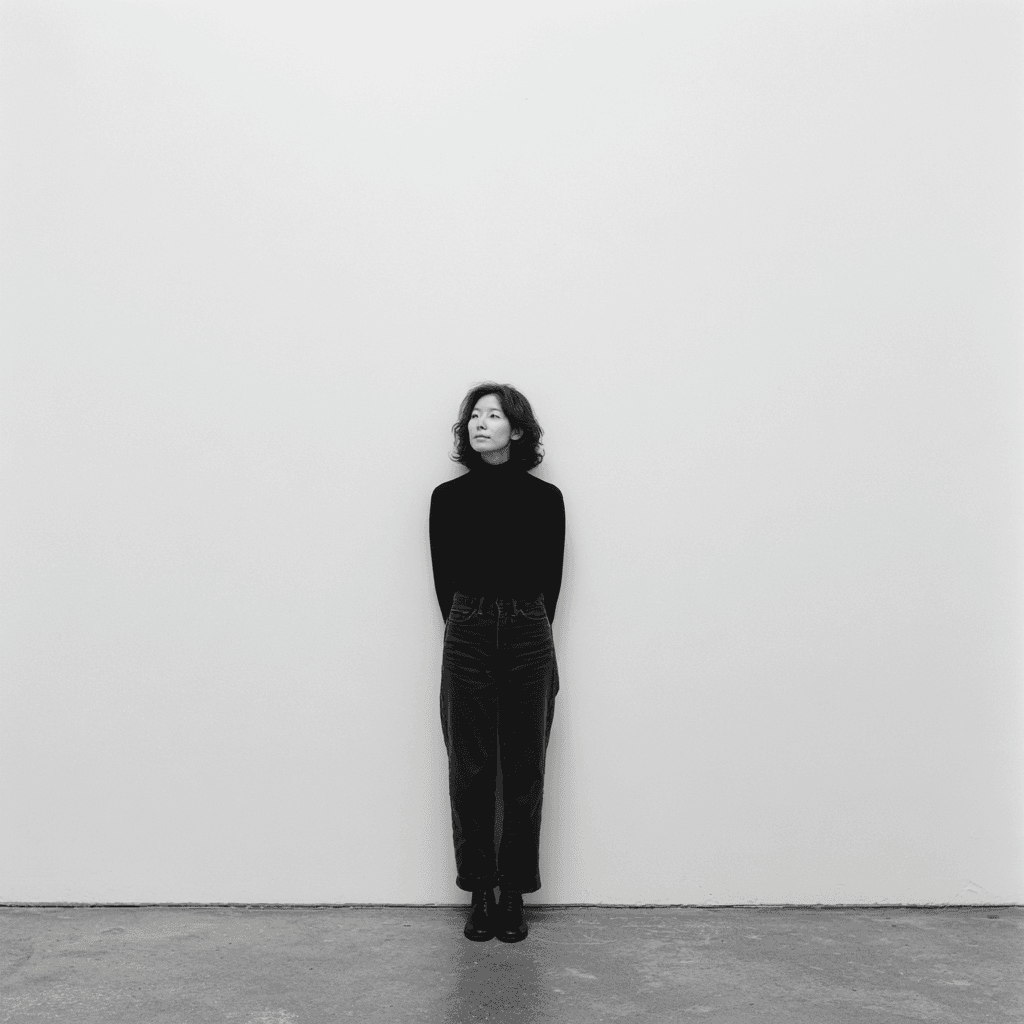
Why Black and White? The Case for Removing Colour
Colour is powerful, but it can also be distracting. When you strip it away, something remarkable happens: the viewer is forced to engage with the image differently. Shapes become sharper. Textures come alive. Shadows tell stories.
This is precisely why black and white photography has remained relevant for over a century. It is not a limitation — it is a choice. As we explore in our piece on minimalist photography as a cultural choice, embracing restraint in visual art is a deliberate, meaningful decision, not a trend.
In the context of minimalism, black and white amplifies everything the style stands for. With fewer visual distractions, the core subject of the image — whether it is an architectural line, a lone figure, or a patch of fog — commands absolute attention.
The Core Principles of Black and White Minimalist Photography
1. Light and Shadow Above All Else
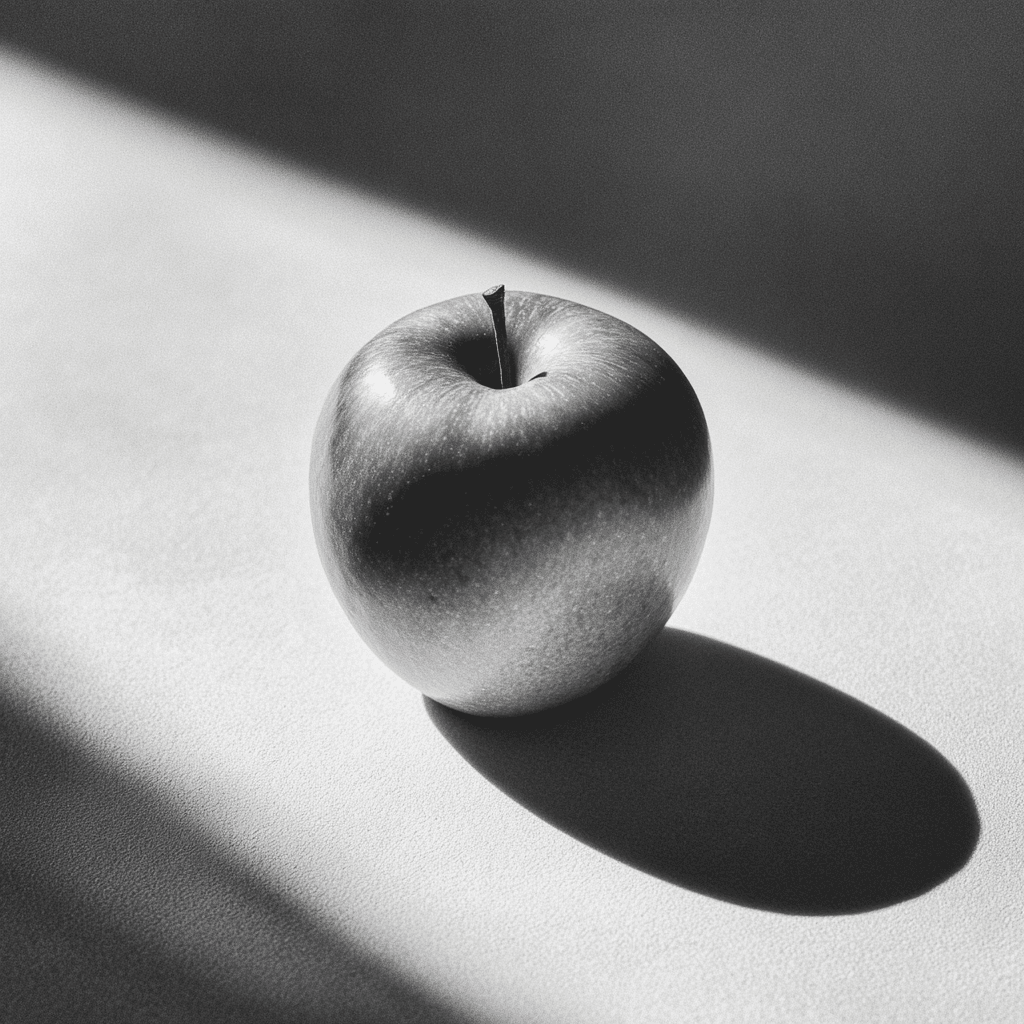
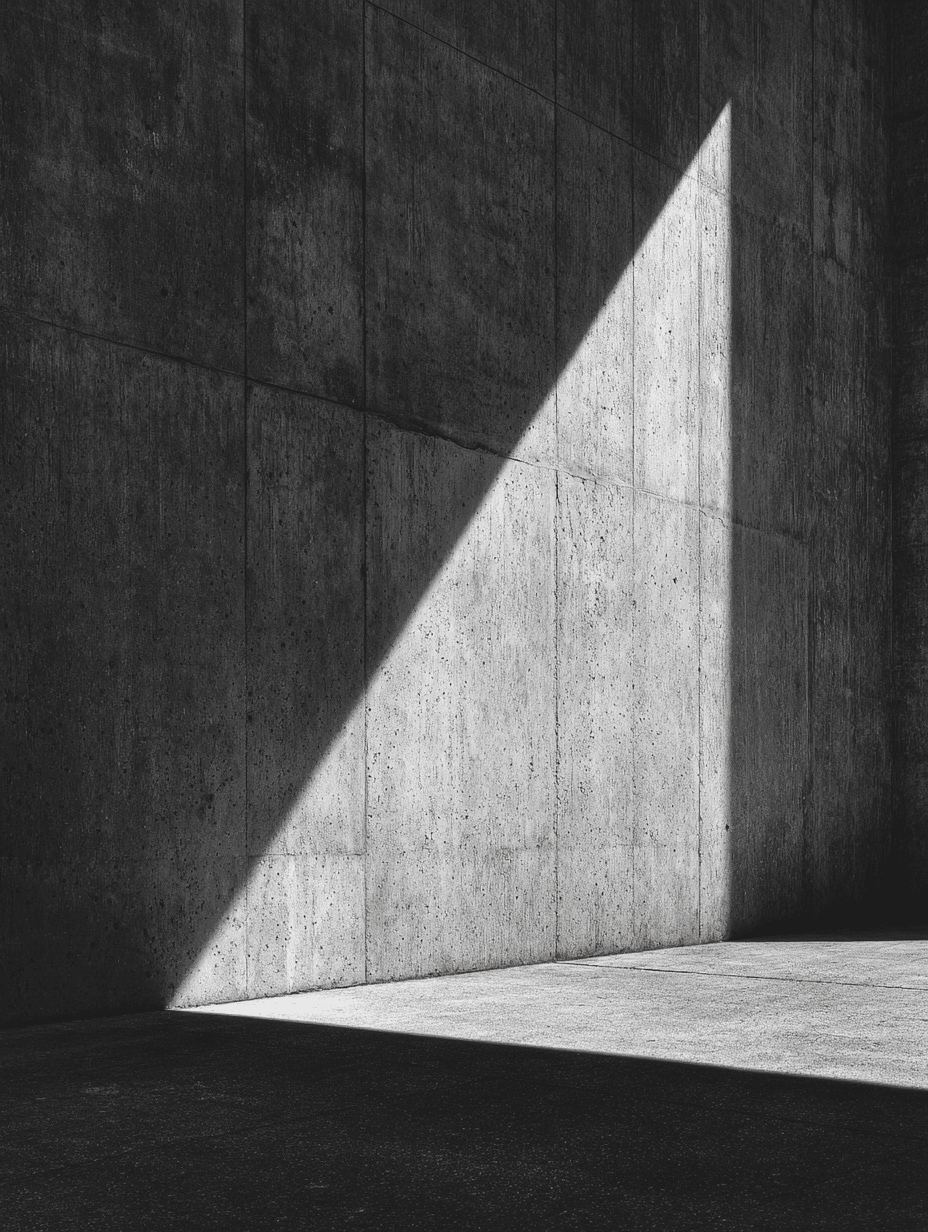
Without colour, light becomes your primary tool. The interplay between highlight and shadow defines the mood, depth, and emotion of a minimalist black and white image. A single shaft of light crossing an empty wall can become a masterpiece.
Pay close attention to the direction and quality of light. Soft, diffused natural light creates calm and serenity. Hard, directional light carves dramatic contrasts. Both are valid — but both require intention. As explored in The Art of Silence, light and geometry are the true backbone of minimalist photography.
2. Composition: Less Is Always More
The philosophy of less is more applies here with full force. A strong black and white minimalist photograph typically features:
- One clear subject
- Generous negative space
- A simple, uncluttered background
- A deliberate point of focus
Resist the temptation to fill the frame. Emptiness is not wasted space — it is an active part of the composition, giving your subject room to breathe and your viewer room to feel.
3. Texture and Form
When colour disappears, texture and form take centre stage. The rough grain of concrete, the smooth curve of a staircase, the delicate veins of a leaf — all of these become rich visual subjects when rendered in monochrome.
Look for surfaces and shapes that have inherent visual interest. In black and white, the subtle becomes striking.
4. Contrast: The Heartbeat of Monochrome
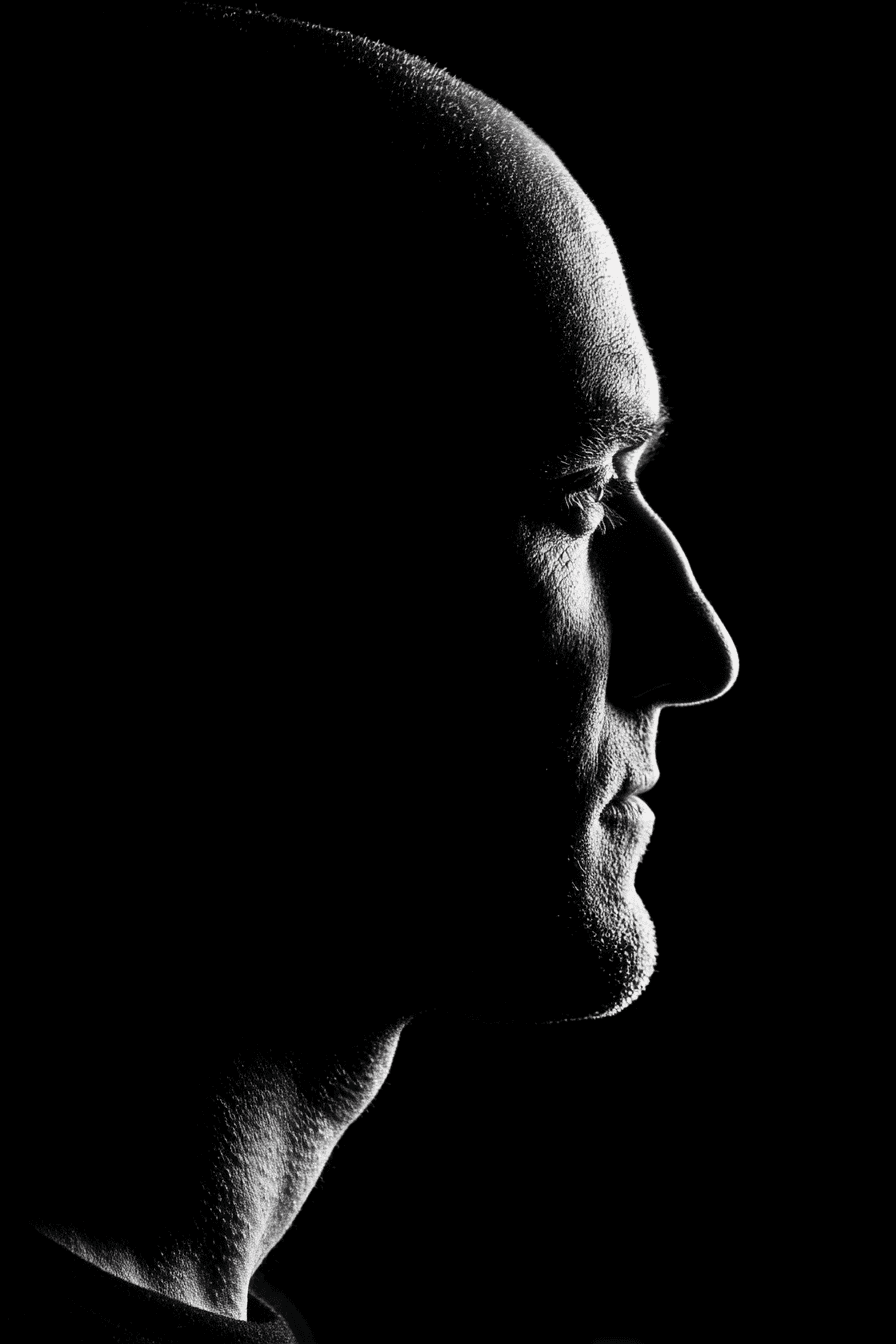
Contrast is what gives a black and white photograph its punch. The range between deep blacks and bright whites creates a visual rhythm that guides the eye. Too flat, and the image feels lifeless. Too extreme, and it loses nuance.
Aim for a tonal range that reflects the mood you want to create. High contrast for drama and tension. Low contrast for stillness and introspection.
Techniques for Capturing Stunning Black and White Minimalist Images
Shoot in RAW and Convert in Post
Always shoot in RAW format. This gives you full control over the conversion to black and white in post-production. Many photographers shoot with a black and white preview on their camera screen to compose in monochrome, while retaining the RAW colour data for editing.
Use Filters to Control Tones
In the film era, coloured filters were used to change how certain tones appeared in black and white. A red filter, for example, darkens blue skies and brightens reds dramatically. These same effects can be replicated in most editing software and can dramatically transform the mood of your image.
Expose for the Highlights
In monochrome photography, blown-out highlights are difficult to recover and can destroy the delicate tonal balance of an image. When in doubt, slightly underexpose and recover the shadows in post — this preserves detail and gives your image depth.
Embrace the Meditative Process
Slowing down is not just a technical approach — it is the spirit of the practice. The meditative experience of minimalist photography is as important as the final image. Take time to observe, to wait, to feel the scene before pressing the shutter.
Finding Your Subjects: Where to Look
Black and white minimalist photography thrives in everyday environments. You do not need exotic locations or rare moments. Some of the most powerful images come from ordinary places, seen with an extraordinary eye.
Architecture is a natural fit. Clean lines, sharp angles, and geometric forms translate beautifully into monochrome. Urban environments — stairwells, corridors, facades — are full of hidden compositions. The visual language of minimalism finds its most natural expression in architectural spaces.
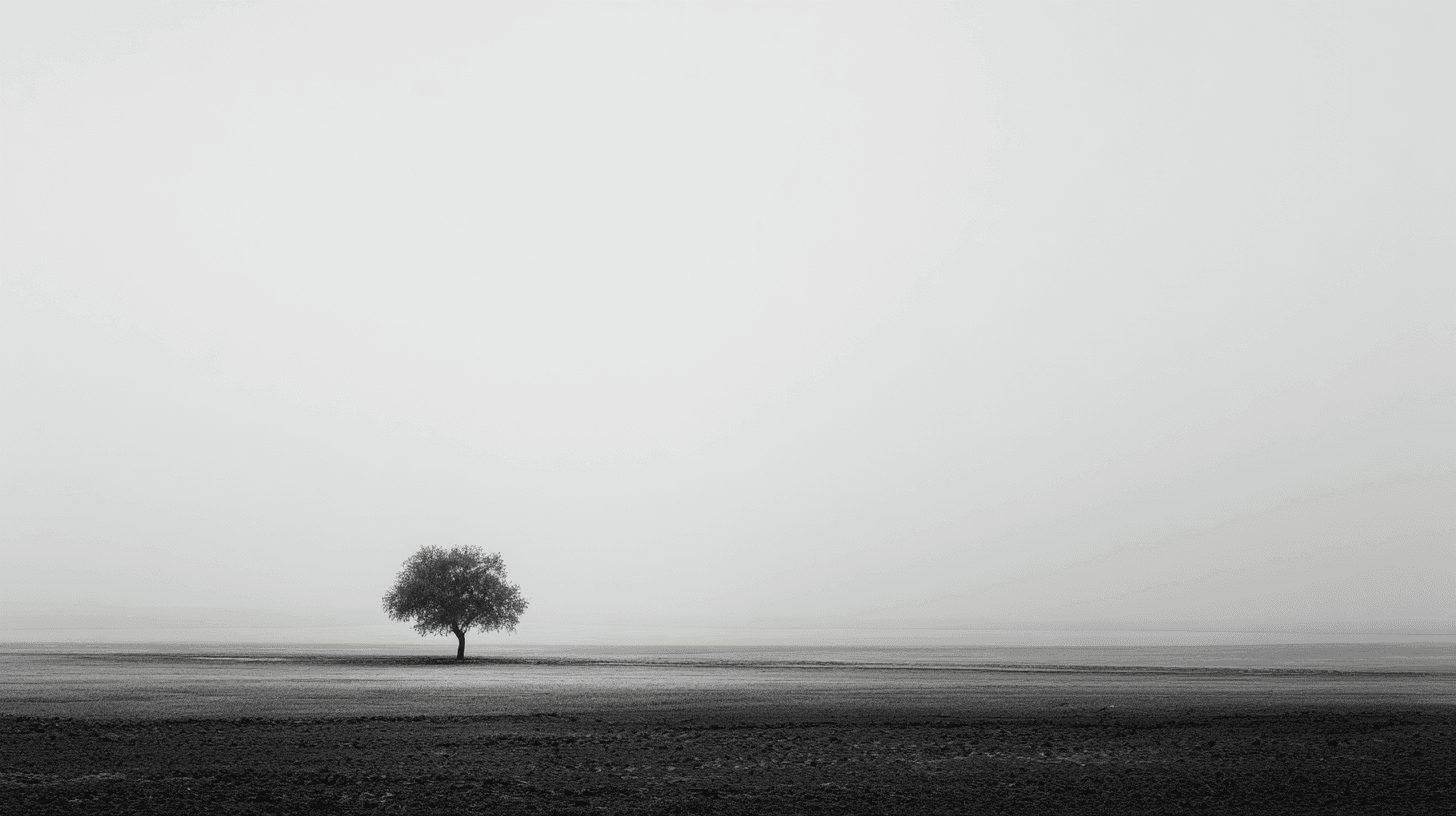
Nature offers another rich territory. Open skies, still water, lone trees in fog — these scenes carry an inherent minimalism that black and white photography only intensifies. This intersection of nature and minimalism is at the heart of eco-photography, where simplicity becomes a form of environmental storytelling.
Still life, shadows, and abstract details round out the subject matter. Look for the shadow of a window frame on a white wall, or the curve of a cup on a plain surface. The mundane, when seen with minimalist eyes, becomes extraordinary.
The Emotional Power of Monochrome Minimalism
There is something about a black and white minimalist photograph that feels honest. Stripped of the seduction of colour, it asks the viewer to look deeper, to sit with the image, to find their own meaning in the silence.
This emotional resonance is not accidental. It is the result of deliberate artistic choices — choices that find calm in simplicity and invite the viewer into a quieter, more attentive way of seeing the world.
Black and white minimalism is not just a photographic style. Like all great minimalist work, it is a reflection of values: clarity over noise, intention over excess, depth over spectacle.
Printing and Displaying Your Black and White Minimalist Work
A black and white minimalist photograph deserves to be printed. On screen, images are consumed quickly and forgotten. On paper — especially high-quality fine art paper — they become objects of contemplation.
Consider large format prints for maximum impact. A single, well-chosen monochrome image on a white wall creates the kind of visual silence that transforms a room. This is why minimalist photography has become such a powerful presence in interior design and home décor — it brings the philosophy of less is more directly into the living space.
Conclusion
Black and white minimalist photography is one of the most rewarding creative paths a photographer can take. It demands discipline, patience, and a willingness to see the world differently. But the rewards — images that are timeless, emotionally resonant, and visually powerful — are well worth the effort.
Start simply. Find one subject. Remove everything else. Let the light do the rest.